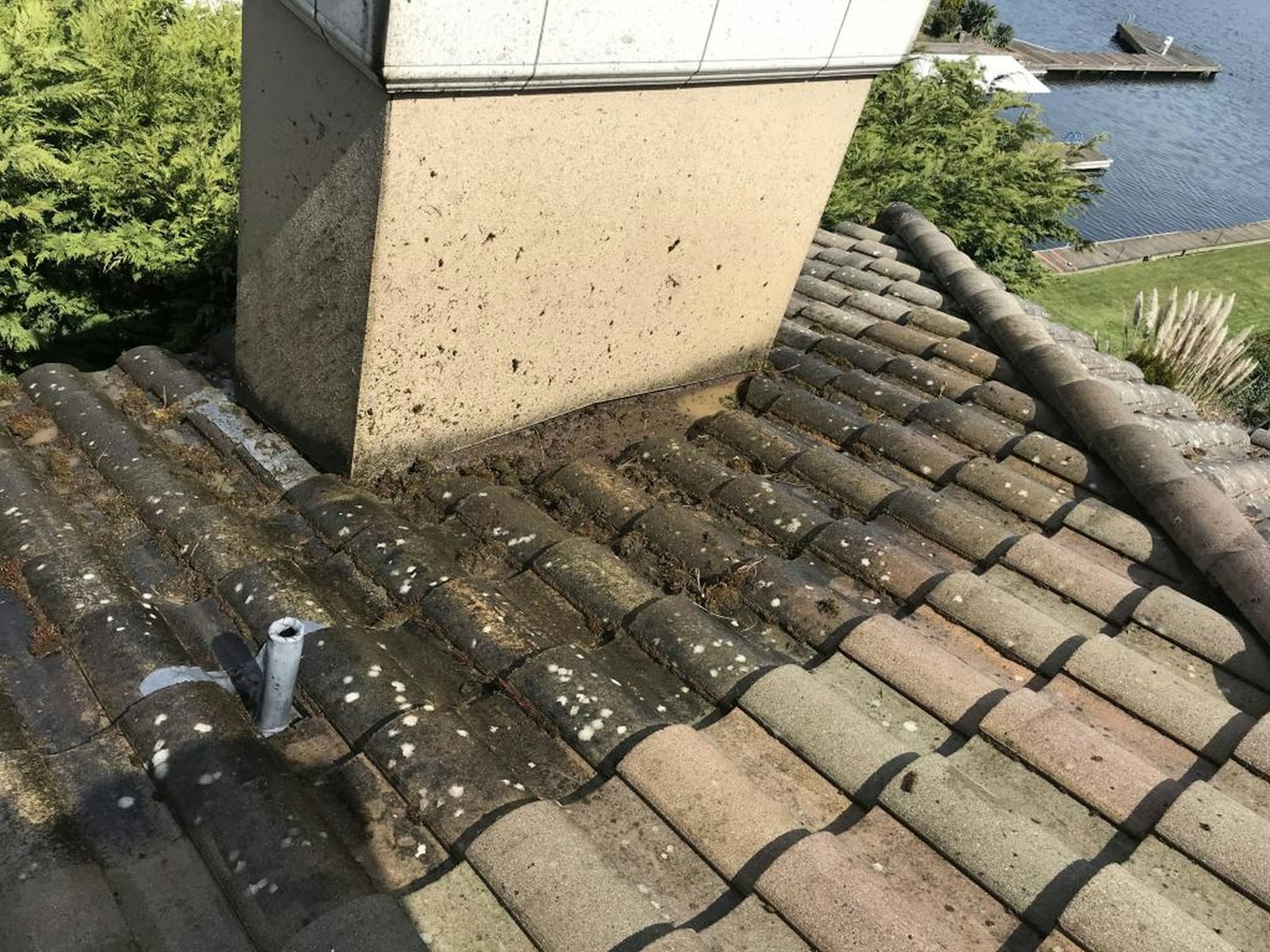
Look up from almost any street in Carrollton, from the cul-de-sacs off Trinity Mills Road to the older blocks near Josey Lane, and you will see two or three short pipes poking through every roof. Those are plumbing vent stacks, and the rubber pipe boot sealed around each one is a small part doing a big job. A roof pipe boot leak usually starts when that rubber collar dries out and cracks, and it is one of the most common reasons a ceiling stain appears on a roof that otherwise looks fine.
This guide walks through how to inspect a vent pipe boot and identify exactly what failed, in seven steps, without climbing onto the roof. By the end you should know whether you are looking at a split collar, a lifted base, a damaged pipe or a joint that was only ever caulked. If the trail ends at the roof, our roof leak repair service picks it up from there.
Step 1: Read the Stain Inside the House
A pipe boot leak tends to leave a small, roughly round stain on a ceiling directly below or a short distance downslope from a vent stack. Vent stacks rise from the plumbing they serve, so the stain usually shows up in a bathroom, laundry room or near a kitchen wall.
Timing is the second clue. A failed boot leaks in ordinary steady rain, not only in sideways storms, because it sits on the open roof where all runoff passes it. The manufacturer GAF lists the signs to watch for after a vent pipe starts letting water in: dark spots on the ceiling, mold growth in the attic and rust on metal parts inside the house.
Step 2: Follow the Vent Stack Up Into the Attic
The attic is where you confirm that the vent pipe, and not some other penetration, is carrying the water. With a flashlight and safe footing on the joists, find the pipe that rises through the ceiling below the stain and follow it up to where it passes through the roof deck.
- Water tracks or mineral streaks running down the outside of the pipe from the deck.
- A dark ring or soft spot on the decking around the hole the pipe passes through.
- Damp or matted insulation gathered at the base of the pipe.
- Rust on an older cast-iron or galvanized stack, or on nails poking through the deck nearby.
If the wood around the pipe is dry but the ceiling below is wet, the water may be coming from a plumbing joint inside the wall instead, which is a job for a plumber rather than a roofer.
Step 3: Look at the Boot From the Ground
Most of what matters on a pipe boot can be seen with a pair of binoculars from the yard or across the street. Check each vent in turn, starting with those on south and west facing slopes, which take the hardest afternoon sun in North Texas.
- The rubber collar: look for splits, cracks, or a collar that has shrunk and pulled away from the pipe, leaving a visible gap.
- The flashing base: the flat plate around the collar should sit flat on the shingles, not curl up at a corner or edge.
- Fasteners: exposed nail heads in the base, especially ones that have backed out, are a common entry point.
- Sealant: a thick smear of tar or caulk around the pipe usually means someone has patched it before.
A home inspector writing about this defect describes the classic failure plainly: the boot has dried out and split. On a dark roof the split may show only as a thin pale line, so a phone camera zoom helps.
Step 4: Identify Which Part Actually Failed
A pipe penetration has four parts that can fail, and each one points to a different repair.
The rubber collar
The collar is the most common failure. It grips the pipe and sheds water past the opening, and once it splits, water runs straight down the pipe into the attic.
The flashing base and how it was laid
The base has to be layered with the shingles so water always runs over it. The Building America Solution Center's guidance on flashing penetrations in existing roofs says water control materials should be installed in shingle fashion, overlapping so that water drains down. In practice that means shingles cover the upper part of the base while the lower part sits on top of the shingles below. A base laid the wrong way round can leak even with a perfect collar.
The pipe itself
Old cast-iron stacks rust and PVC can crack, particularly where it has been hit. If the pipe is damaged right at the collar, a new boot will not seal against it.
A joint that was only ever caulked
Some vents never had a proper boot at all. GAF notes that some installers simply cut the shingles around the vent pipe and caulk the joint, and that caulked joints can quickly crack with changing temperatures or sun exposure. If all you can see around a pipe is sealant, assume the flashing is missing underneath.
Step 5: Factor In What North Texas Sun Does to Rubber
Heat and ultraviolet light are what age a pipe boot, and Carrollton supplies plenty of both. The rubber sits fully exposed through long summers and slowly hardens until it can no longer flex, and then it splits.
For a sense of scale, the same Minnesota home inspector reports that rubber boots seem to last about 10 to 15 years there. A city that straddles Dallas, Denton and Collin counties sees far more strong sun across the year than Minnesota does, so treat that range as an upper bound rather than a promise here, and expect boots on sun-facing slopes to give out before the shingles around them do. Spring hail adds another hit: a collar already brittle from heat can crack from a single strike.
Step 6: Match the Repair to the Failure
Once you know which part failed, the repair is mostly decided for you.
- Split collar on a sound base: a replacement rubber collar that slips over the old one is a common quick fix. The home inspector notes these cost under $10, though on a sun-baked roof it is often a stopgap rather than a long-term answer.
- Gasketless replacement: some manufacturers now make boots with no rubber to dry out. The Perma-Boot vent pipe flashing uses a patented gasketless design in weather resistant plastic, fits 1.5, 2 and 3 inch vent pipes, with a 4 inch size also made, and adjusts to roof pitches from 3/12 to 12/12.
- Lifted, rusted or wrongly layered base: the whole flashing should be replaced, which means lifting the shingles above it so the new base can be woven in properly.
- Damaged pipe or rotted decking: the pipe section or the wood around the hole has to be repaired first, or the new boot will have nothing solid to seal against.
If the roof is close to replacement anyway, it can make sense to wait and do it right. The Building America guidance recommends that when roofing is replaced, you take the opportunity to inspect all of the flashing and repair or replace any that is missing, damaged or poorly installed at every roof penetration. A roof replacement quote should list new pipe boots as a line item.
Step 7: Skip the Shortcuts That Make It Worse
The most common mistake with a pipe boot leak is a tube of sealant. A bead of caulk around a split collar can stop a drip for a few weeks, but it cracks under the same heat that split the rubber and hides the damage. Our chimney guide covers the same trap in why caulk keeps failing on flashing.
Stay off the roof, especially on a hot afternoon when shingles soften and scuff. Put a bucket under any drip, photograph the stain and the boot from the ground, and note the date and the kind of rain. A roof inspection with those notes in hand can usually confirm the cause in one visit.
Quick Answers on Leaking Vent Pipe Boots
How do I know if my pipe boot is leaking?
Look for a small, round ceiling stain below a vent stack that grows after ordinary rain, then check the attic for water tracks down the pipe. A cracked collar or lifted base seen from the ground confirms it.
How long does a roof pipe boot last?
It depends heavily on sun exposure. A Minnesota home inspector reports about 10 to 15 years there, and boots under North Texas sun tend to give out sooner, often well before the shingles around them.
Can I just put a new collar over the old one?
Sometimes. A slip-over collar can work when the base is flat, well nailed and correctly layered with the shingles. If the base is lifted or rusted, the whole flashing needs replacing.
Is a pipe boot repair worth it on an older roof?
Yes, if the rest of the roof has life left, because a single failed boot can rot the decking around it. If the roof is near the end, the better move is to replace the boots with the roof. Roofing Carrollton Pros handles both, and you can start with a leak repair visit to find out which applies.
Ceiling stain under a vent pipe?
We check the collar, the flashing base and the decking around the pipe, then show you photos of whichever one let the water in.